
How to Choose a Medicated Oil in the UK: Ingredients, Uses and Safety
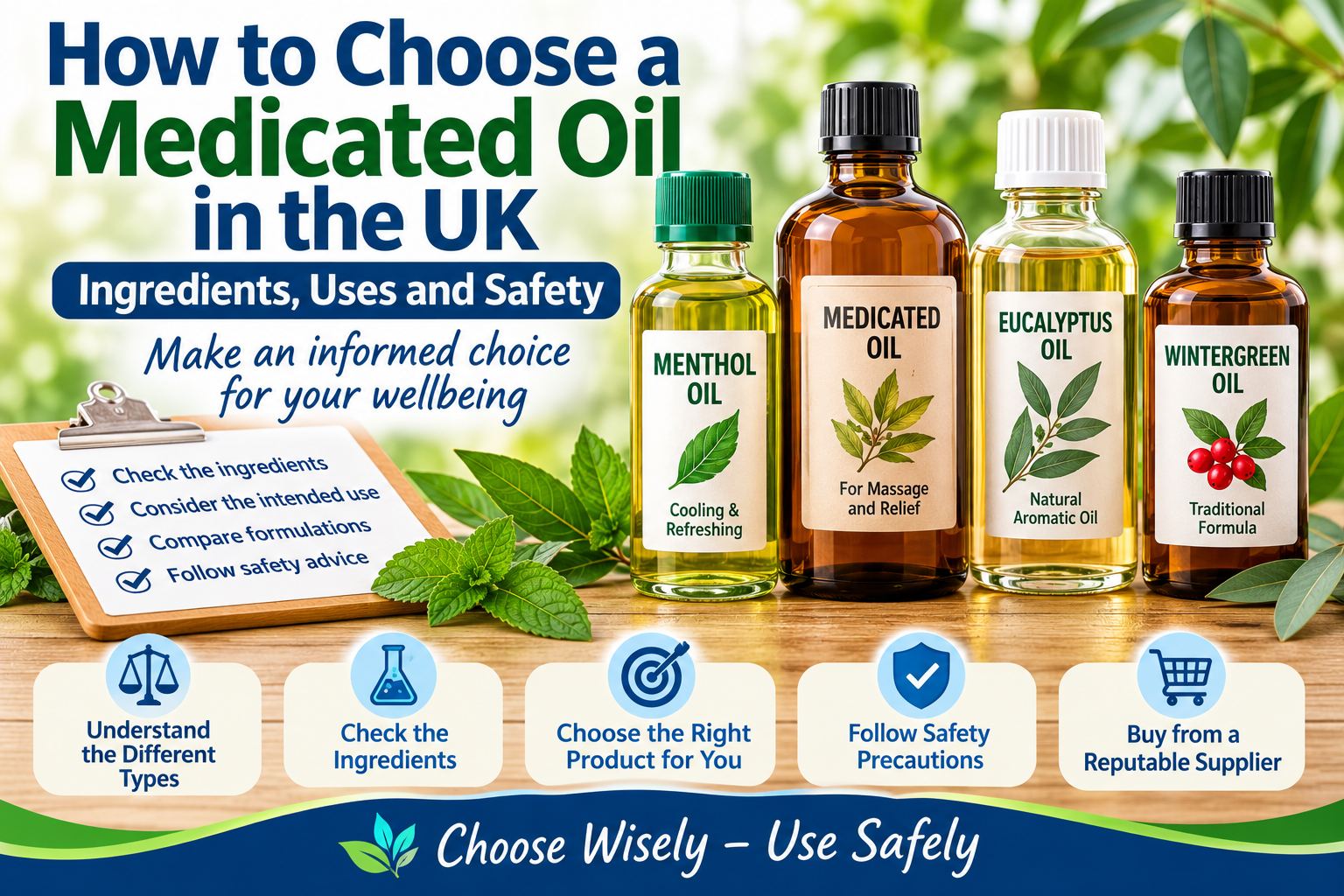
Traditional medicated oils have been used for generations and remain popular in many households. From familiar amber bottles to herbal-inspired massage preparations, these products come in different formulations, scents and strengths.
But with so many options available, how do you know which medicated oil to choose?
Whether you are looking for a traditional massage oil, a product containing menthol or camphor, or simply want to understand the ingredients before buying, knowing what to look for can help you make a more informed decision.
In this guide, we explore the different types of medicated oils, common ingredients, what to consider when choosing a product and how to use these preparations responsibly.
What Is a Medicated Oil?
A medicated oil is a topical preparation containing one or more ingredients intended for a particular purpose.
Traditional formulations may contain aromatic plant oils, cooling or warming ingredients, and other compounds commonly found in topical preparations.
Depending on the product, ingredients may include:
- Menthol
- Camphor
- Eucalyptus oil
- Methyl salicylate
- Wintergreen oil
- Other aromatic ingredients
Some products are designed for massage, while others are formulated for specific uses such as temporary relief of minor aches and discomfort.
It is important to understand that not every product described as a medicated oil is necessarily a licensed medicine. Its intended use, regulatory status and permitted claims depend on the individual product.
1. Understand the Different Types of Medicated Oil
One of the first things to consider is the type of preparation you are buying.
Although many products look similar, their ingredients and intended uses can be quite different.
Traditional medicated oils
Traditional medicated oils often contain combinations of aromatic ingredients such as menthol, camphor and eucalyptus oil.
They may be used as part of a massage routine or for the purposes described on their packaging.
Some familiar products have been popular for generations, with distinctive aromas and recognisable packaging.
Cooling oils
Cooling preparations commonly contain menthol or other ingredients associated with a refreshing sensation.
Menthol interacts with sensory receptors in the skin, creating a cooling feeling without necessarily lowering the actual temperature of the skin.
These products are often chosen by people who prefer a cooling sensation during their massage or everyday wellbeing routine.
Warming oils
Warming preparations may contain ingredients such as methyl salicylate or camphor.
They are commonly associated with a warming or tingling sensation when applied to the skin.
However, a warming sensation does not necessarily mean that the underlying muscles are being heated or that an injury is healing.
Massage oils
Some oils are formulated primarily for massage rather than as medicinal preparations.
They may contain botanical oils, fragrance ingredients or other components designed to provide a particular texture and massage experience.
Always check the intended use. A product designed for massage is not automatically suitable for treating pain or other symptoms.
2. Check the Ingredients Before Buying
The ingredient list is one of the most useful parts of a product’s packaging.
Understanding the main ingredients can help you compare different formulations and identify anything you may need to avoid.
Here are some ingredients commonly found in traditional medicated oils.
Menthol
Menthol is widely used in topical preparations because it creates a cooling sensation.
It is commonly found in cooling gels, massage products and medicated oils.
Some people prefer products containing menthol because of the refreshing sensation they provide.
Read more in our guide: Menthol Oil vs Medicated Oil: What’s the Difference?
Camphor
Camphor is an aromatic compound found in various traditional topical preparations.
Depending on the formulation, it may contribute to a cooling, warming or tingling sensation.
It is important to use camphor-containing products according to their instructions because swallowing camphor can be dangerous.
Read more: Camphor in Medicated Oils: Uses, Ingredients and Safety Guide.
Eucalyptus oil
Eucalyptus oil is an aromatic essential oil obtained from eucalyptus trees.
It is used in certain topical preparations, massage products and traditional medicated oils.
Its distinctive fresh aroma makes it a familiar ingredient in many traditional formulations.
Read more: Eucalyptus Oil in Topical Products: Uses, Benefits and Safety Guide.
Methyl salicylate
Methyl salicylate is associated with wintergreen oil and is used in certain topical preparations, including some warming muscle rubs.
It has a characteristic wintergreen-like aroma.
Products containing methyl salicylate require particular care because excessive exposure or accidental ingestion can cause serious harm.
Read more: Methyl Salicylate in Medicated Oils: Uses, Benefits and Safety Guide.
Wintergreen oil
Wintergreen oil is a concentrated essential oil that naturally contains a high proportion of methyl salicylate.
Although it is plant-derived, it should not be assumed to be harmless.
Concentrated wintergreen oil can be dangerous if swallowed and must only be handled and used according to appropriate product instructions.
Read more: What Is Wintergreen Oil? Uses, Benefits and Safety Guide.
3. Consider What You Want the Product For
Before choosing a medicated oil, think about how you intend to use it.
Different preparations are designed for different purposes, so selecting a product based on its intended use is important.
For example:
| Your preference | What to consider |
|---|---|
| A refreshing sensation | Products containing menthol |
| A warming sensation | Certain preparations containing camphor or methyl salicylate |
| A traditional aromatic product | Formulations containing eucalyptus, camphor or other aromatic ingredients |
| A massage routine | Products specifically labelled for massage or topical application |
| A familiar traditional preparation | Established brands with clear product information |
These are general ingredient associations, not guarantees of effectiveness.
Always check the manufacturer’s description and instructions before deciding whether a product is appropriate.
4. Compare the Strength and Formulation
Not all medicated oils contain the same ingredients or concentrations.
Two bottles may look similar but have very different formulations.
When comparing products, consider:
- The complete ingredient list.
- The concentration of active ingredients, where disclosed.
- Whether the product is intended for direct skin application.
- The recommended amount and frequency of use.
- Any age restrictions or other warnings.
- The manufacturer’s instructions.
Avoid assuming that a stronger-smelling product is more effective or that using a larger quantity will produce better results.
Using more than the recommended amount can increase the risk of unwanted reactions.
5. Choose a Reputable Brand and Supplier
When buying traditional medicated oils, it is worth paying attention to the brand and the supplier.
A reputable product should provide clear information about what it contains and how it should be used.
Look for:
Clear labelling: The packaging should identify the product and provide appropriate instructions and warnings.
Ingredient information: You should be able to identify the main ingredients and check for anything you may be sensitive to.
Manufacturer details: Look for identifiable manufacturer or responsible business information.
Original packaging: Avoid products that appear to have been opened, tampered with or transferred into unlabelled containers.
Reliable suppliers: Choose established retailers that provide clear product descriptions and customer information.
Be particularly cautious when buying concentrated essential oils or products from unfamiliar online sellers.
6. How to Use Medicated Oil Safely
Even familiar traditional products need to be used responsibly.
Always follow the instructions on the specific product you have purchased.
Here are some general precautions to remember.
Apply only as directed
Check whether the product is suitable for direct skin application and follow the recommended quantity and frequency.
Some concentrated oils require dilution, while finished topical preparations may already be formulated for their intended use.
Never assume that all medicated oils can be applied in the same way.
Avoid broken or irritated skin
Do not apply a product to cuts, wounds or irritated areas unless the product instructions specifically allow it.
Stop using the product if you experience unexpected irritation, burning or a rash.
Keep away from the eyes
Avoid contact with the eyes, mouth and other sensitive areas.
Wash your hands after application to reduce the risk of accidentally transferring the product.
Be careful when using heat
Do not use a heating pad, hot-water bottle or other external heat source over an area treated with a medicated oil unless the manufacturer specifically confirms that this is safe.
Some topical ingredients can cause unwanted reactions when combined with heat.
Check age restrictions
Some ingredients, particularly camphor and concentrated essential oils, can be dangerous if swallowed.
Certain preparations are unsuitable for young children.
Always check the age restrictions and keep products securely stored away from children.
Consider allergies and existing medication
If you have sensitive skin, known allergies, an existing medical condition or take regular medication, ask a pharmacist whether a particular product is suitable.
This is especially important for products containing salicylates, such as methyl salicylate.
7. Are Natural Medicated Oils Better Than Synthetic Products?
This is a question many people ask when comparing traditional and modern topical preparations.
Natural ingredients can be
2 responses