
Cooling Gel vs Menthol Oil: Which Should You Choose?
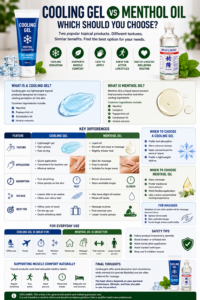
When looking for topical products to support muscle comfort, two popular options are cooling gels and menthol oils.
Both are widely used as part of everyday wellbeing routines and provide a refreshing cooling sensation when applied to the skin. However, they differ in texture, application, absorption, and user experience.
In this guide, we’ll compare cooling gels and menthol oils to help you decide which option may best suit your needs.
What Is a Cooling Gel?
Cooling gels are lightweight topical products designed to create a cooling sensation on the skin.
Many formulations contain ingredients such as:
- Menthol
- Peppermint oil
- Eucalyptus oil
- Herbal extracts
Cooling gels are popular because they absorb quickly and often leave very little residue.
What Is Menthol Oil?
Menthol oil is a liquid topical product that contains menthol and other cooling ingredients.
Many menthol oils also include:
- Camphor
- Peppermint oil
- Eucalyptus oil
- Traditional herbal extracts
Menthol oils are often chosen for massage and targeted application.
Key Differences Between Cooling Gels and Menthol Oils
Texture
Cooling Gels
- Lightweight
- Fast drying
- Non-greasy feel
Menthol Oils
- Liquid consistency
- Easy to massage
- Slightly longer absorption time
Application
Cooling Gels
- Quick application
- Convenient for daytime use
- Minimal residue
Menthol Oils
- Ideal for massage
- Easy to spread over larger areas
- Popular for post-exercise routines
Sensation
Both products create a cooling sensation, although the intensity varies depending on the formulation.
Some users prefer gels for a lighter feel, while others enjoy the traditional experience of menthol oils.
When to Choose a Cooling Gel
Cooling gels may be a good option if you:
- Prefer fast absorption
- Want minimal residue
- Need something convenient for work or travel
- Prefer a lightweight texture
Many people use cooling gels throughout the day because they absorb quickly.
When to Choose Menthol Oil
Menthol oil may be a good option if you:
- Enjoy massage
- Prefer traditional formulations
- Want flexible application
- Like a more concentrated cooling experience
Menthol oils are especially popular after physical activity.
Cooling Gel vs Menthol Oil for Massage
When it comes to massage, many people prefer menthol oils because they:
- Spread more easily
- Stay workable longer
- Cover larger areas comfortably
Cooling gels can still be used during massage, but their faster absorption may require more frequent application.
Cooling Gel vs Menthol Oil for Everyday Use
For everyday use, both options can work well.
Many people choose:
Cooling Gel For:
- Office use
- Travel
- Quick application
- Minimal mess
Menthol Oil For:
- Home use
- Massage routines
- Post-exercise care
- Larger muscle groups
Safety Tips
When using topical cooling products:
- Follow product instructions carefully
- Avoid broken or irritated skin
- Wash hands after application
- Avoid contact with eyes and sensitive areas
- Stop use if irritation occurs
Supporting Muscle Comfort Naturally
Topical products are often used alongside healthy habits such as:
- Regular stretching
- Staying active
- Good posture
- Movement breaks
- Adequate rest
These habits help support overall comfort and wellbeing.
Final Thoughts
Cooling gels and menthol oils are both popular options for people looking to incorporate cooling topical products into their wellbeing routines.
Cooling gels offer quick absorption and convenience, while menthol oils provide flexibility and are often preferred for massage.
The best choice depends on your personal preferences, lifestyle, and how you plan to use the product.
For more information please refer to our other blog posts:
- Best Cooling Gels for Muscle Comfort in the UK
- How to Apply Menthol Oil Properly
- Can You Use Menthol Oil Every Day?
- Menthol Oil vs Tiger Balm
- Menthol Oil vs Deep Heat
- Best Menthol Oils for Back Pain
Disclaimer
This article is for general educational and wellbeing purposes only. It is not intended as medical advice and should not replace guidance from a qualified healthcare professional.
2 responses