
Best Cooling Gels for Muscle Comfort in the UK
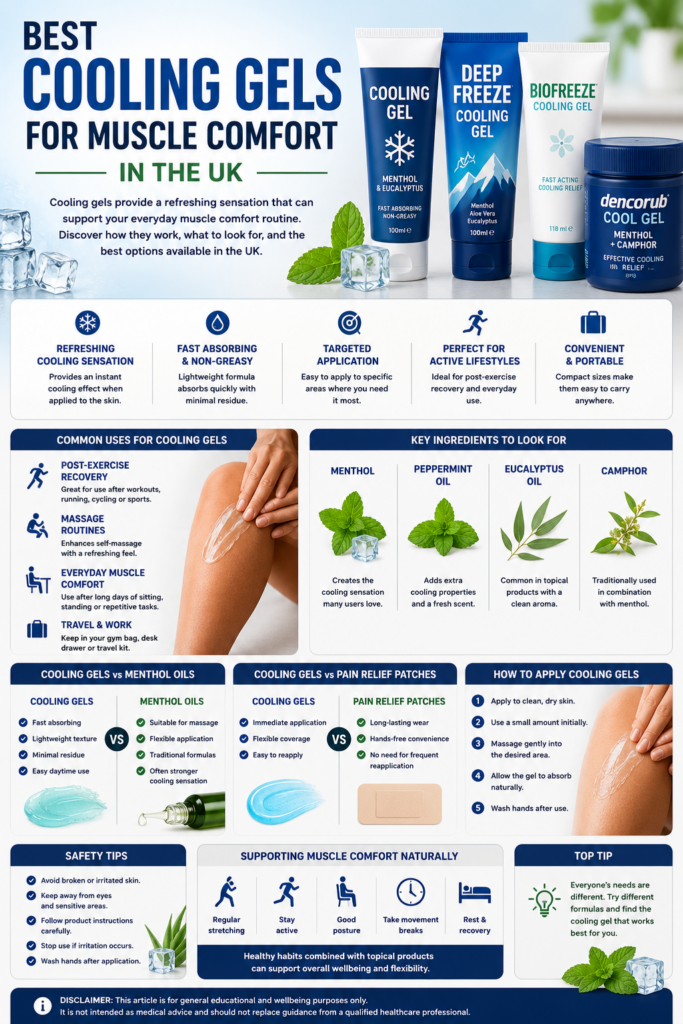
Cooling gels have become a popular choice for people looking to support muscle comfort as part of their everyday wellbeing routine. Easy to apply and quick to absorb, they offer a refreshing sensation that many people enjoy after exercise, long workdays, or periods of physical activity.
In this guide, we’ll explore what cooling gels are, how they work, and what to look for when choosing the best cooling gel for your needs.
What Are Cooling Gels?
Cooling gels are topical products designed to create a cooling sensation on the skin.
Many formulations contain ingredients such as:
- Menthol
- Peppermint oil
- Eucalyptus oil
- Camphor
- Herbal extracts
These ingredients help create the refreshing feeling that cooling gels are known for.
Why Are Cooling Gels Popular?
Many people choose cooling gels because they are:
- Easy to apply
- Fast absorbing
- Non-greasy
- Suitable for targeted application
- Convenient for active lifestyles
Unlike thicker balms, cooling gels often leave less residue on the skin.
Common Uses for Cooling Gels
Cooling gels are frequently used as part of:
Post-Exercise Recovery
Many active individuals apply cooling gels after workouts, running, cycling, or sports activities.
Massage Routines
Cooling gels can be used during self-massage routines to help create a refreshing experience.
Everyday Muscle Comfort
People often use cooling gels after long days spent sitting, standing, or performing repetitive movements.
Travel and Work
Compact packaging makes many cooling gels convenient to keep in a gym bag, desk drawer, or travel kit.
Key Ingredients to Look For
Menthol
Menthol is one of the most common ingredients found in cooling gels.
It creates the cooling sensation many users associate with muscle comfort products.
Peppermint Oil
Peppermint oil contributes additional cooling properties and a refreshing scent.
Eucalyptus Oil
Eucalyptus oil is commonly included in topical wellbeing products and adds a distinctive aroma.
Camphor
Camphor is often used alongside menthol in traditional cooling formulations.
Cooling Gels vs Menthol Oils
Cooling Gels
- Fast absorbing
- Lightweight texture
- Minimal residue
- Easy daytime use
Menthol Oils
- Suitable for massage
- Flexible application
- Traditional formulations
- Often provide a stronger cooling sensation
Many people use both depending on the situation.
Cooling Gels vs Pain Relief Patches
Cooling Gels
- Immediate application
- Flexible coverage
- Easy to reapply
Pain Relief Patches
- Long-lasting wear
- Hands-free convenience
- No need for frequent reapplication
The best option depends on personal preference and lifestyle.
How to Apply Cooling Gels
For best results:
- Apply to clean, dry skin.
- Use a small amount initially.
- Massage gently into the desired area.
- Allow the gel to absorb naturally.
- Wash hands after use.
Always follow the manufacturer’s instructions.
Safety Tips
When using cooling gels:
- Avoid broken or irritated skin.
- Keep away from eyes and sensitive areas.
- Follow product instructions carefully.
- Stop use if irritation occurs.
- Wash hands after application.
Supporting Muscle Comfort Naturally
Cooling gels are often used alongside healthy habits such as:
- Regular stretching
- Staying active
- Maintaining good posture
- Taking movement breaks
- Adequate rest and recovery
These habits can help support overall wellbeing and flexibility.
Final Thoughts
Cooling gels are a convenient and popular option for people looking to add a refreshing topical product to their wellbeing routine.
Their lightweight texture, quick absorption, and cooling sensation make them a popular choice for active individuals and everyday use alike.
Choosing the right cooling gel comes down to personal preference, ingredients, and how you plan to incorporate it into your daily routine.
for more information please refer to our other blog posts:
- Best Menthol Oils for Back Pain
- Best Menthol Oils for Shoulder Pain
- Best Menthol Oils for Knee Pain
- How to Apply Menthol Oil Properly
- Menthol Oil vs Tiger Balm
Disclaimer
This article is for general educational and wellbeing purposes only. It is not intended as medical advice and should not replace guidance from a qualified healthcare professional.
3 responses