
What Is Wintergreen Oil? Uses, Benefits and Safety Guide
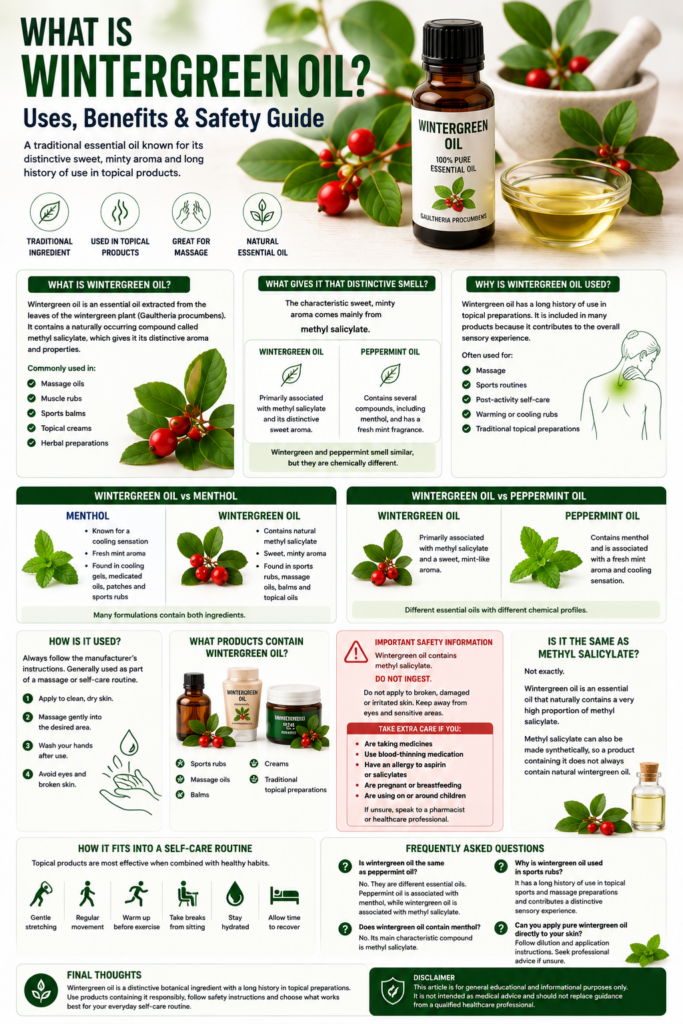
Wintergreen oil is a distinctive-smelling essential oil that appears in a range of topical products, including massage oils, muscle rubs, balms and sports preparations.
Although it has been used traditionally in topical preparations for many years, wintergreen oil is quite different from ingredients such as menthol, peppermint oil and eucalyptus oil.
So, what exactly is wintergreen oil, why is it used in topical products, and what should you know before using it?
In this guide, we’ll look at wintergreen oil, its common uses, how it compares with other topical ingredients, and important safety considerations.
What Is Wintergreen Oil?
Wintergreen oil is an essential oil traditionally obtained from the leaves of the wintergreen plant, particularly Gaultheria procumbens.
It has a distinctive sweet, minty aroma and contains a naturally occurring compound called methyl salicylate.
Because of its characteristic scent and properties, wintergreen oil has traditionally been used in topical preparations and massage products.
Today, wintergreen oil may be found in products such as:
- Massage oils
- Muscle rubs
- Sports balms
- Topical creams
- Herbal preparations
What Gives Wintergreen Oil Its Distinctive Smell?
The characteristic aroma of wintergreen oil comes primarily from methyl salicylate.
This gives the oil its recognisable sweet, mint-like fragrance.
Although wintergreen can smell similar to peppermint, the two oils are chemically different.
Wintergreen Oil
Primarily associated with methyl salicylate and its distinctive sweet aroma.
Peppermint Oil
Contains several naturally occurring compounds, including menthol, and is known for its fresh mint fragrance.
This is an important distinction when comparing different essential oils used in topical products.
Why Is Wintergreen Oil Used in Topical Products?
Wintergreen oil has a long history of use in topical preparations.
It is commonly included because it contributes to the overall sensory experience of products designed for massage and everyday self-care.
You’ll often find it in formulations intended for:
- Massage
- Sports routines
- Post-activity self-care
- Warming or cooling rubs
- Traditional topical preparations
The exact experience will depend on the complete formulation and concentration of the product.
Wintergreen Oil vs Menthol
Wintergreen oil and menthol are sometimes found in similar types of products, but they are not the same ingredient.
Menthol
Menthol is particularly well known for producing a cooling sensation on the skin.
It is commonly found in:
- Cooling gels
- Medicated oils
- Topical patches
- Sports rubs
- Massage products
Wintergreen Oil
Wintergreen oil contains naturally occurring methyl salicylate and has a distinctive sweet, minty aroma.
It is commonly found in:
- Sports preparations
- Massage products
- Balms
- Topical oils
Some formulations contain both ingredients.
Wintergreen Oil vs Peppermint Oil
Wintergreen and peppermint can both have a fresh, mint-like aroma, but they are different essential oils.
Peppermint oil contains menthol and is particularly associated with a cooling sensation.
Wintergreen oil is primarily associated with methyl salicylate and has a sweeter, distinctive aroma.
Understanding these differences can help when comparing the ingredients in topical products.
How Is Wintergreen Oil Used?
When wintergreen oil is included in a commercially prepared topical product, always follow the manufacturer’s instructions.
Depending on the formulation, the product may be applied to the skin as part of a massage or self-care routine.
Do not assume that a pure essential oil can be used in the same way as a finished topical product.
Always check the label for:
- Recommended application
- Dilution instructions
- Maximum usage
- Age restrictions
- Safety warnings
Important Wintergreen Oil Safety Information
Wintergreen oil requires particular care because it contains methyl salicylate.
Do not ingest wintergreen oil.
It should also not be applied to broken, damaged or irritated skin.
Keep products containing wintergreen oil away from the eyes and other sensitive areas, and wash your hands after application.
Take Extra Care If You:
- Are taking medicines
- Use blood-thinning medication
- Have an allergy to aspirin or salicylates
- Are pregnant or breastfeeding
- Are considering using the product on a child
If any of these apply, speak to a pharmacist or healthcare professional before using a product containing wintergreen oil.
Always follow the specific safety information supplied with the product.
Is Wintergreen Oil the Same as Methyl Salicylate?
Not exactly.
Wintergreen oil is an essential oil that naturally contains a very high proportion of methyl salicylate.
Methyl salicylate itself is a chemical compound that can also be produced synthetically.
This means that a product containing methyl salicylate does not necessarily contain natural wintergreen oil.
Checking the ingredient list is therefore important if you’re specifically looking for a particular type of formulation.
What Products Contain Wintergreen Oil?
Wintergreen oil or methyl salicylate can be found in various topical preparations, including:
- Sports rubs
- Massage oils
- Balms
- Creams
- Traditional topical preparations
Different products have different formulations, so always check the ingredients before purchasing.
How Does Wintergreen Fit Into a Self-Care Routine?
Topical products containing wintergreen oil are often used alongside other everyday wellbeing habits.
A balanced routine might include:
- Gentle stretching
- Regular movement
- Warming up before exercise
- Taking breaks during long periods of sitting
- Staying hydrated
- Allowing adequate recovery time
A topical product can be one part of a wider self-care routine rather than a replacement for healthy lifestyle habits.
Frequently Asked Questions
Is Wintergreen Oil the Same as Peppermint Oil?
No. They are different essential oils. Peppermint oil is associated with menthol, while wintergreen oil is primarily associated with naturally occurring methyl salicylate.
Does Wintergreen Oil Contain Menthol?
Wintergreen oil itself is not a source of menthol. Its main characteristic compound is methyl salicylate.
Why Is Wintergreen Oil Used in Sports Rubs?
It has a long history of use in topical sports and massage preparations and contributes a distinctive sensory experience to these formulations.
Can You Apply Pure Wintergreen Oil Directly to Your Skin?
Pure essential oils should not automatically be treated like finished topical products. Follow the product-specific dilution and application instructions and seek professional advice if you’re unsure.
Does Wintergreen Oil Smell Like Mint?
It has a sweet, mint-like aroma, although its fragrance is different from peppermint.
Final Thoughts
Wintergreen oil is a distinctive botanical ingredient with a long history in topical preparations.
Its naturally occurring methyl salicylate gives it characteristics that distinguish it from popular ingredients such as menthol, peppermint oil and eucalyptus oil.
Because wintergreen oil requires particular care, it’s important to use products containing it exactly as directed and to pay attention to the manufacturer’s safety information.
Understanding the ingredients in topical products can make it easier to choose products that fit your preferences and everyday self-care routine.
For more information please refer to our other blog posts:
🔗 Internal Links
I’d add links to these existing articles:
- Best Natural Ingredients for Muscle Comfort
- Menthol vs Camphor: What’s the Difference?
- Peppermint Oil vs Menthol: What’s the Difference?
- What Does Eucalyptus Oil Do in Topical Products?
- What Does Camphor Do in Topical Products?
- Cooling Gel vs Menthol Oil
- What Is Kwan Loong Medicated Oil Used For?
Disclaimer
This article is for general educational and informational purposes only. It is not intended as medical advice and should not replace guidance from a qualified healthcare professional.
2 responses