
What Does Camphor Do in Topical Products?
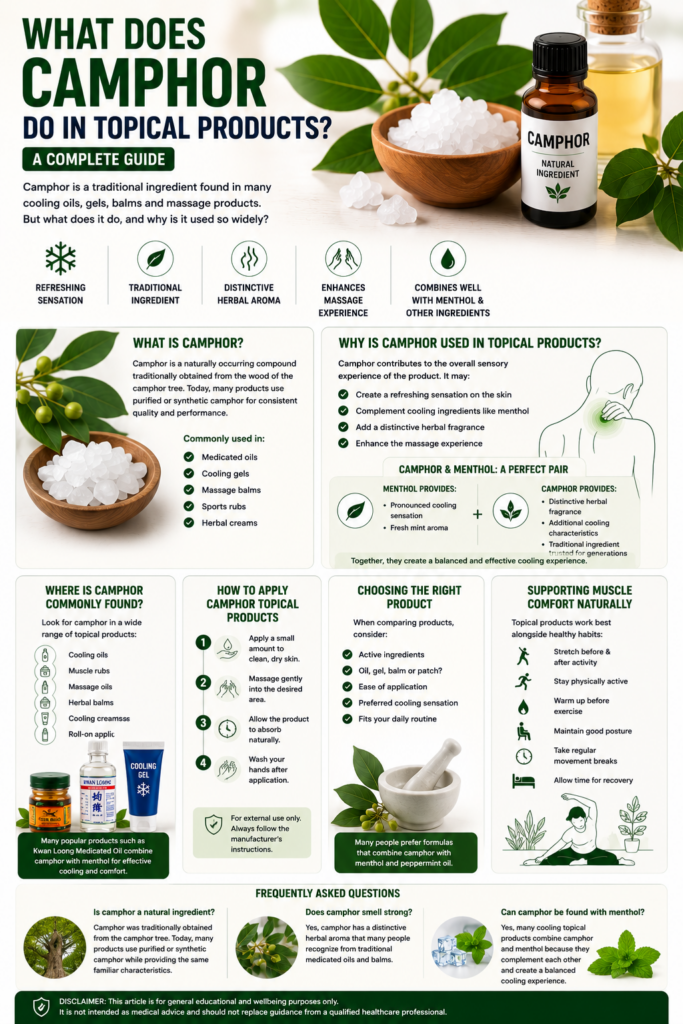
If you’ve ever looked at the ingredients list on medicated oils, cooling gels, massage balms or muscle rubs, you’ve probably noticed camphor appearing alongside ingredients such as menthol and peppermint oil.
Camphor has been used in traditional topical products for centuries and remains a common ingredient in many modern wellbeing products.
But what exactly is camphor, and why is it included in so many topical formulations?
In this guide, we’ll explain what camphor is, how it’s commonly used, and why it remains a popular ingredient in cooling topical products.
What Is Camphor?
Camphor is a naturally occurring compound traditionally obtained from the wood of the camphor tree (Cinnamomum camphora).
Today, many topical products use purified or synthetic camphor that provides the same familiar characteristics while ensuring consistent quality.
Camphor has a distinctive herbal aroma and is widely used in:
- Medicated oils
- Cooling gels
- Massage balms
- Sports rubs
- Herbal creams
Why Is Camphor Used in Topical Products?
Camphor is included in many topical formulations because it contributes to the overall sensory experience of the product.
Depending on the formulation, camphor may:
- Create a refreshing sensation on the skin
- Complement cooling ingredients such as menthol
- Add a distinctive herbal fragrance
- Enhance the massage experience
Its long history of traditional use has made it a familiar ingredient in many wellbeing products.
Camphor and Menthol: Why Are They Used Together?
One of the most common ingredient combinations is camphor and menthol.
These ingredients complement one another because:
Menthol provides:
- A pronounced cooling sensation
- A fresh mint aroma
Camphor provides:
- A distinctive herbal fragrance
- Additional cooling characteristics
- A traditional component found in many medicated oils
Many popular topical products combine both ingredients to create a balanced formulation.
Which Products Commonly Contain Camphor?
Camphor can be found in a wide range of topical wellbeing products, including:
- Cooling oils
- Muscle rubs
- Massage oils
- Herbal balms
- Cooling creams
- Roll-on applicators
Products such as Kwan Loong Medicated Oil combine camphor with menthol as part of a traditional formulation.
How Is Camphor Applied?
Camphor is intended for external use only as part of topical products.
For best results:
- Apply a small amount to clean, dry skin.
- Massage gently into the desired area.
- Allow the product to absorb naturally.
- Wash your hands after application.
Always follow the manufacturer’s instructions supplied with your chosen product.
Choosing Products That Contain Camphor
When comparing topical products, consider:
- The active ingredients
- Whether the product is an oil, gel, balm or patch
- Ease of application
- Your preferred cooling sensation
- Whether it fits your daily routine
Many people prefer products that combine camphor with other traditional ingredients such as menthol and peppermint oil.
Supporting Muscle Comfort Naturally
Topical products are often used alongside healthy lifestyle habits, including:
- Stretching before and after activity
- Staying physically active
- Taking regular movement breaks
- Maintaining good posture
- Allowing time for recovery after exercise
Combining these habits with a suitable topical product can support your overall wellbeing routine.
Frequently Asked Questions
Is Camphor a Natural Ingredient?
Camphor was traditionally obtained from the camphor tree. Today, many products use purified or synthetic camphor while providing the same familiar characteristics.
Does Camphor Smell Strong?
Yes. Camphor has a distinctive herbal aroma that many people recognise from traditional medicated oils and balms.
Can Camphor Be Found with Menthol?
Yes. Many cooling topical products combine camphor and menthol because they complement one another and create a balanced cooling experience.
Final Thoughts
Camphor remains one of the most widely used ingredients in topical wellbeing products.
Its traditional heritage, distinctive aroma and compatibility with ingredients such as menthol have helped make it a key component of medicated oils, cooling gels and massage products around the world.
Understanding the role of camphor can help you choose products that best match your preferences and support your everyday self-care routine.
for more information please refer to our other blog posts:
Link this article to:
- Menthol vs Camphor: What’s the Difference?
- Peppermint Oil vs Menthol: What’s the Difference?
- Best Natural Ingredients for Muscle Comfort
- What Is Kwan Loong Medicated Oil Used For?
- How to Apply Menthol Oil Properly
- Cooling Gel vs Menthol Oil
- Can You Use Menthol Oil Every Day?
Disclaimer
This article is for general educational and wellbeing purposes only. It is not intended as medical advice and should not replace guidance from a qualified healthcare professional.