
Menthol Oil vs Deep Heat: What’s the Difference?
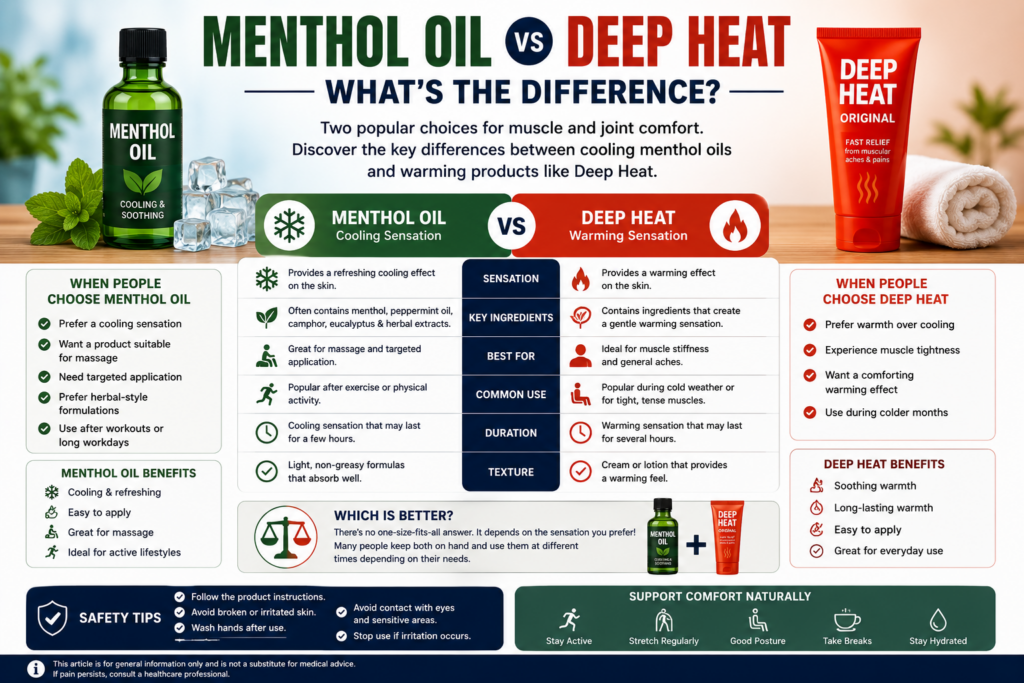
When looking for topical products to support muscle and joint comfort, two common options people come across are menthol oils and warming products such as Deep Heat.
While both are used as part of everyday wellbeing routines, they create very different sensations and experiences.
In this guide, we’ll explain the key differences between menthol oil and Deep Heat-style warming products so you can decide which option may suit your preferences.
What Is Menthol Oil?
Menthol oil is a topical product that creates a cooling sensation when applied to the skin.
Many menthol oils contain ingredients such as:
- Menthol
- Peppermint oil
- Camphor
- Eucalyptus oil
- Herbal extracts
They are commonly used as part of massage and self-care routines.
Many people enjoy the refreshing cooling effect, particularly after physical activity or long days at work.
What Is Deep Heat?
Deep Heat is a well-known warming topical product.
Unlike menthol oils, warming products are designed to generate a sensation of heat on the skin.
Many people choose warming products when they prefer a comforting warm feeling rather than a cooling sensation.
The Main Difference: Cooling vs Warming
The biggest difference between the two products is the sensation they create.
Menthol Oil
- Cooling sensation
- Refreshing feel
- Often used after activity
- Popular for massage
Deep Heat
- Warming sensation
- Gentle heat effect
- Often used for stiffness
- Popular during colder weather
Neither option is necessarily better. The best choice often comes down to personal preference.
When People Prefer Menthol Oil
Many people choose menthol oil when they:
- Enjoy cooling sensations
- Want a product suitable for massage
- Need targeted application
- Prefer herbal-style formulations
Menthol oils are particularly popular among active individuals.
When People Prefer Deep Heat
Many people choose warming products when they:
- Prefer heat rather than cooling
- Experience muscle tightness
- Want a comforting warming effect
- Use topical products during colder months
Which Lasts Longer?
This often depends on:
- The product formulation
- The amount applied
- Individual skin response
Both cooling and warming sensations can last for several hours, although experiences vary between individuals.
Menthol Oil vs Deep Heat for Massage
Menthol oils are often preferred for massage because they:
- Spread easily
- Absorb well into the skin
- Allow targeted application
Many people incorporate them into stretching and recovery routines.
Menthol Oil vs Deep Heat: Which Is Better?
There is no single “best” option.
If you prefer a refreshing cooling sensation, menthol oil may suit you better.
If you enjoy a warming feeling on the skin, a warming product may be more appealing.
Many people keep both available and use them at different times depending on their needs.
Supporting Muscle Comfort Naturally
Whether you choose cooling or warming topical products, they are often combined with healthy habits such as:
- Regular stretching
- Staying active
- Good posture
- Taking movement breaks
- Maintaining flexibility
These habits help support overall wellbeing and comfort.
Safety Tips
When using topical products:
- Follow the manufacturer’s instructions
- Avoid broken or irritated skin
- Wash hands after application
- Avoid contact with eyes and sensitive areas
- Stop use if irritation occurs
Final Thoughts
Menthol oil and Deep Heat-style products offer different experiences.
Menthol oils provide a cooling sensation and are often used for massage and post-activity comfort, while warming products provide gentle heat that many people find comforting for stiffness and tension.
The best choice depends on your personal preference and the type of sensation you enjoy.
for more information please refer to our other blog posts:
- How Often Can You Use Menthol Oil?
- Best Menthol Oils for Back Pain
- Best Menthol Oils for Shoulder Pain
- Best Menthol Oils for Knee Pain
- Menthol Oil vs Pain Relief Patches
Disclaimer
This article is for general educational and wellbeing purposes only. It is not intended as medical advice and should not replace guidance from a qualified healthcare professional.
4 responses