
Cooling vs Warming Pain Relief Patches: Which Should You Choose? (UK Guide)
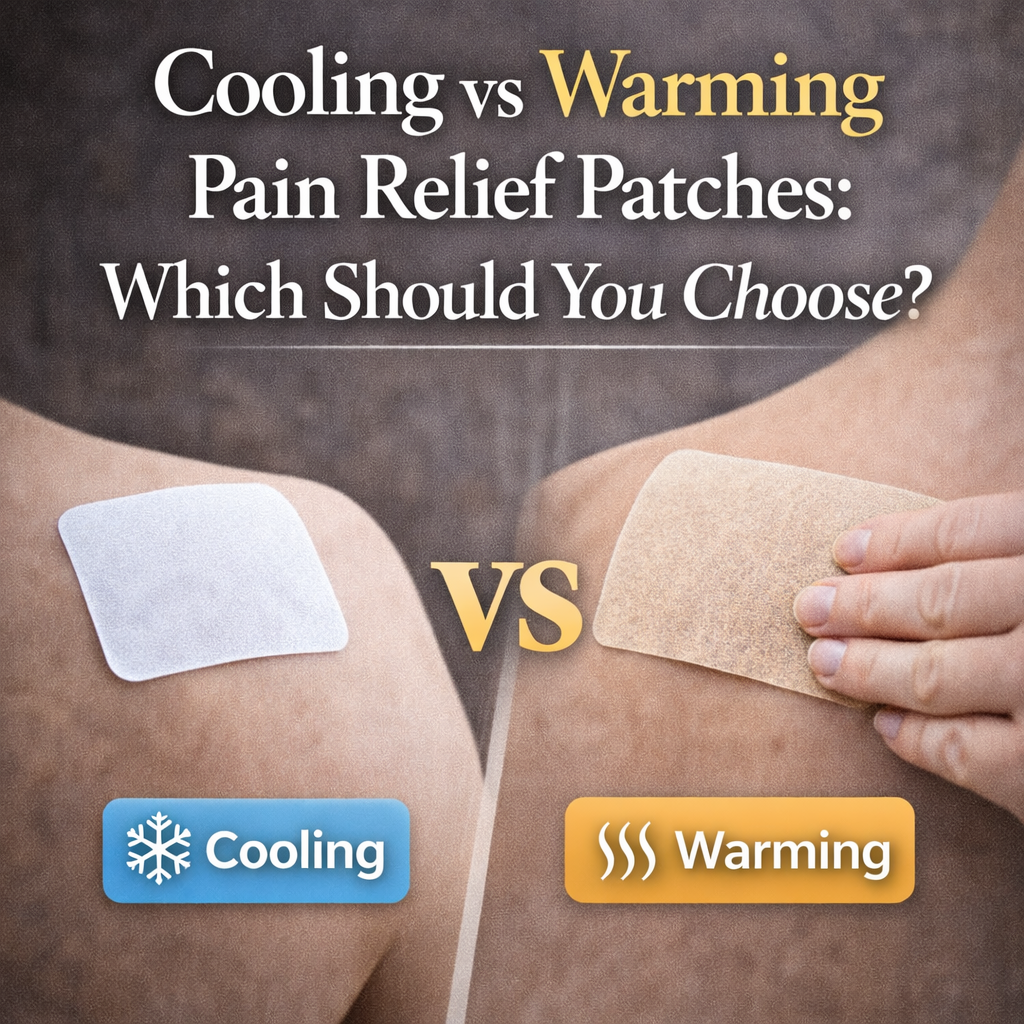
Pain relief patches are a convenient way to target muscle and joint discomfort, but one of the most common questions people ask is whether they should choose a cooling patch or a warming patch.
Both options are widely used in the UK and can feel very different on the skin. Understanding how each type works can help you choose the best option for your needs.
In this guide, we compare cooling and warming pain relief patches, explain when each may be useful, and help you decide which one best suits your routine.
What Are Cooling Pain Relief Patches?
Cooling patches commonly contain ingredients such as:
- Menthol
- Methyl salicylate
- Mint-based extracts
These ingredients create a cooling sensation when applied to the skin.
Many people choose cooling patches for:
- Post-exercise muscle soreness
- Neck and shoulder tension
- Lower back discomfort
- Everyday aches after physical activity
The cooling sensation can feel refreshing and soothing, especially after movement or long periods of sitting.
What Are Warming Pain Relief Patches?
Warming patches create a gentle heat sensation on the skin.
These may contain warming ingredients or use heat-generating materials within the patch itself.
They are often chosen for:
- Stiff muscles
- Morning tightness
- Relaxation before sleep
- General muscle tension
The warming effect may help muscles feel more relaxed.
Key Difference: Sensation and Timing
The biggest difference is how they feel and when they are often used.
Cooling Patches
Best suited for:
- Daytime use
- After exercise
- Fresh muscle soreness
- Areas that feel tense or overworked
Warming Patches
Best suited for:
- Evening use
- Long-standing stiffness
- Cold weather discomfort
- Relaxation and comfort
Which Is Better for Muscle Pain?
Neither is automatically “better” — it depends on the situation.
Cooling May Be Better If:
- The area feels overworked after activity
- You want a fresh, cooling sensation
- You need something for daytime use
Warming May Be Better If:
- Muscles feel stiff or tight
- You want comfort while resting
- You prefer a soothing heat sensation
Cooling vs Warming for Back Pain
For lower back discomfort, many people choose based on timing:
- Cooling during the day
- Warming in the evening
This can fit naturally into different routines.
Cooling vs Warming for Neck and Shoulder Tension
For desk-related neck and shoulder tightness:
- Cooling patches are popular during work hours
- Warming patches are often used at home or before bed
This depends on personal preference.
Can You Use Both?
Some people use both at different times of day.
For example:
- Cooling after work or exercise
- Warming later in the evening
Always avoid layering multiple patches on the same area at the same time.
How to Choose the Right Patch
Ask yourself:
- Do I want cooling or warmth?
- Is this fresh soreness or stiffness?
- Will I wear it during the day or at night?
The answers usually make the choice easier.
Supporting Results with Good Habits
Patches work best when combined with:
- Stretching
- Movement breaks
- Good posture
- Hydration
- Rest
These habits support muscle comfort naturally.
Final Thoughts
Both cooling and warming pain relief patches can be useful depending on your needs.
Cooling patches are often preferred for daytime freshness and post-activity use, while warming patches are popular for stiffness and evening relaxation.
Choosing the right one comes down to when you plan to use it and the type of sensation you prefer.
for more info please refer to our other blog posts:
- Best Pain Relief Patches in the UK
- Salonpas vs Other Pain Relief Patches
- Menthol Oil vs Pain Relief Patches
Disclaimer
This article is for general educational and wellbeing purposes only. It is not intended as medical advice and should not replace guidance from a qualified healthcare professional.
4 responses