
Where Should You Apply Pain Relief Patches for Best Results? (UK Guide)
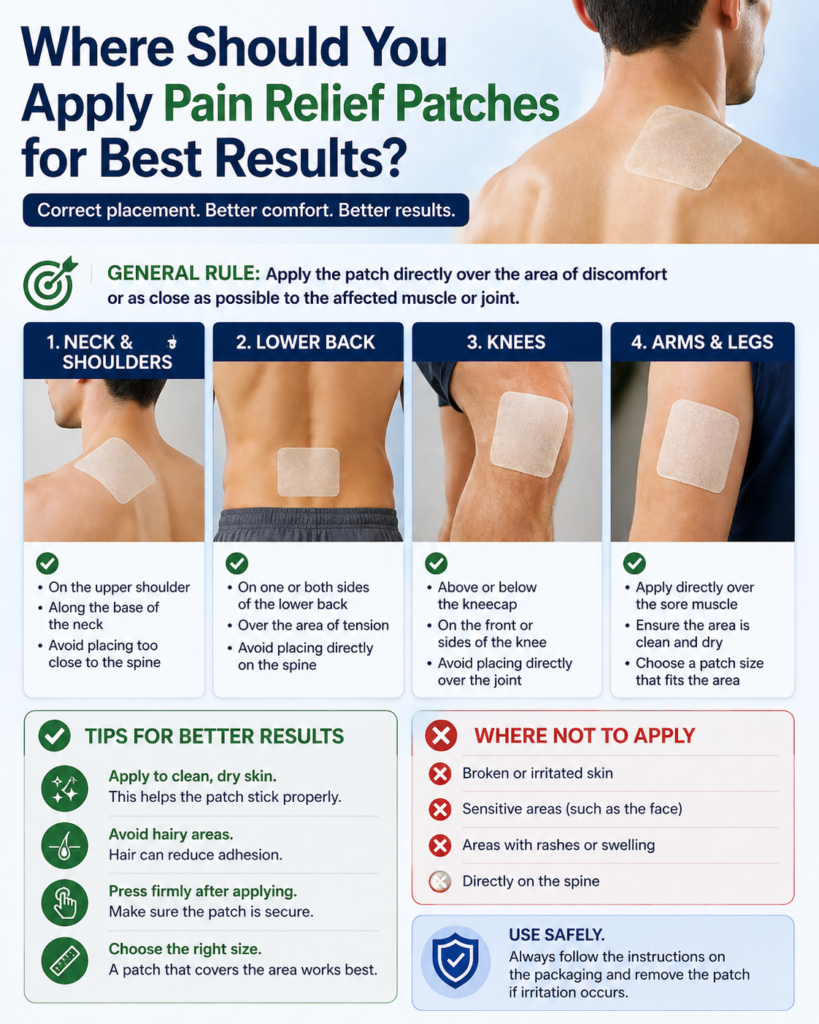
Pain relief patches are designed to provide targeted support for muscle and joint comfort. They are easy to use, long-lasting, and convenient for everyday situations.
But to get the most benefit, placement matters.
In this guide, we explain where to apply pain relief patches for best results, along with practical tips for safe and effective use.
How Pain Relief Patches Work
Pain relief patches are applied directly to the skin over the area of discomfort.
They gradually release ingredients such as menthol or other active compounds, providing a cooling or warming sensation over time.
Because they work locally, placing the patch in the right position is important.
General Rule: Apply Close to the Source
For best results, apply the patch:
Directly over the area of discomfort
Or as close as possible to the affected muscle or joint
This helps ensure the ingredients are delivered where they are needed most.
Common Areas to Apply Pain Relief Patches
1. Neck and Shoulders
This is one of the most common areas for tension, especially from desk work or posture.
Apply the patch:
- On the upper shoulder area
- Along the base of the neck
- Avoid placing too close to the spine
2. Lower Back
Lower back discomfort is often linked to sitting, lifting, or daily strain.
Apply the patch:
- On one or both sides of the lower back
- Over the area of tension
- Avoid placing directly on the spine
3. Knees
Knee patches can help support comfort during movement.
Apply:
- Above or below the kneecap
- On the front or sides of the knee
- Avoid placing directly over joints that bend heavily
4. Arms and Legs
For general muscle soreness:
- Apply directly over the sore muscle
- Ensure the area is clean and dry
- Choose a patch size that fits the area
Where NOT to Apply Pain Relief Patches
To use patches safely, avoid applying them to:
- Broken or irritated skin
- Sensitive areas (such as the face)
- Areas with rashes or swelling
- Directly on the spine
Tips for Better Results
1. Apply to Clean, Dry Skin
This helps the patch stick properly and work effectively.
2. Avoid Hairy Areas
Hair can reduce adhesion and make removal uncomfortable.
3. Press Firmly After Applying
Make sure the patch is secure and flat against the skin.
4. Choose the Right Size
A patch that fully covers the area of discomfort will be more effective.
Can You Use More Than One Patch?
Some products allow multiple patches to be used at the same time, but always follow the instructions on the packaging.
Avoid overlapping patches unless specifically advised.
Combining Patches with Other Options
Pain relief patches can be used as part of a broader routine.
Some people also use:
- Menthol oils
- Stretching exercises
- Heat therapy
- Movement and posture improvements
Combining approaches can help support overall comfort.
When Placement Makes a Big Difference
Correct placement is especially important for:
- Targeted muscle tension
- Posture-related discomfort
- Localised soreness
Even small adjustments in placement can improve results.
Final Thoughts
Pain relief patches work best when applied directly to the area of discomfort or as close as possible.
Choosing the right location, following instructions, and using patches safely can help you get the most from them.
Used correctly, they can be a simple and effective part of your daily routine.
for more information please refer to our other blog posts:
- How Long Should You Leave a Pain Relief Patch On
- Best Pain Relief Patches in the UK
- Cooling vs Warming Pain Relief Patches
- Salonpas vs Other Pain Relief Patches
- Menthol Oil vs Pain Relief Patches
Disclaimer
This article is for general educational and wellbeing purposes only. It is not intended as medical advice and should not replace guidance from a qualified healthcare professional.
One Response