
Menthol Oil vs Pain Relief Patches: Which Is Better for Muscle Pain?
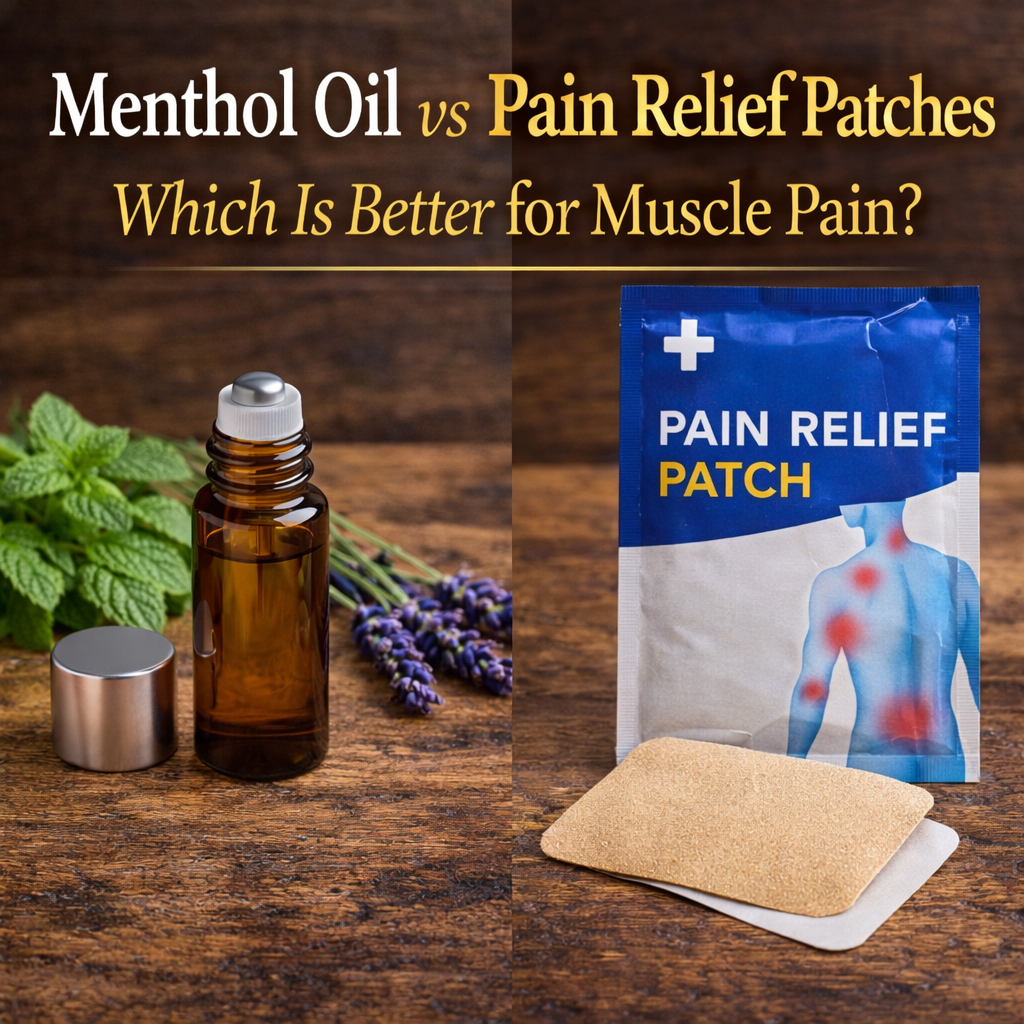
When dealing with muscle tension or everyday aches, many people look for topical solutions that can be applied directly to the area of discomfort. Two popular options are menthol-based oils and pain relief patches.
Both approaches provide targeted application and are commonly used for minor muscle and joint discomfort. But how do they differ, and which option might be more suitable for different situations?
In this guide, we compare menthol oils and pain relief patches, explaining how they work and when each option may be useful.
What Is Menthol Oil?
Menthol oil is a topical product commonly derived from mint plants. It is widely used in muscle rubs, roll-on oils, and medicated oils.
When applied to the skin, menthol activates cold-sensitive receptors, creating a cooling sensation that many people find soothing for tense muscles.
Menthol oils are often applied using:
- Roll-on applicators
- Massage oils
- Medicated oils
They are typically used for targeted application to areas such as the neck, shoulders, back, and legs.
What Are Pain Relief Patches?
Pain relief patches are adhesive patches placed directly onto the skin over the area of discomfort.
These patches often contain ingredients such as:
- Menthol
- Methyl salicylate
- Camphor
Once applied, the patch gradually releases its active ingredients through the skin. This is sometimes referred to as transdermal delivery.
Because the patch stays in place, it can provide continuous topical support for several hours.
Key Differences Between Menthol Oil and Pain Relief Patches
Application Method
Menthol Oil
- Applied directly to the skin
- Usually massaged into the affected area
- Can be reapplied if needed
Pain Relief Patches
- Adhesive patch placed on the skin
- Stays in place for several hours
- Provides gradual ingredient release
Some people prefer the flexibility of oils, while others like the convenience of a patch.
Coverage Area
Menthol oil allows you to massage and spread the product across a wider area, which can be helpful for larger muscle groups such as the back or shoulders.
Patches, on the other hand, cover a specific targeted area and remain fixed in position.
Duration of Use
Pain relief patches often remain in place for 8–12 hours, depending on the product.
Menthol oils typically provide a cooling sensation for a shorter period and may be reapplied if needed according to product instructions.
Convenience
Both products offer convenience, but in different ways.
Menthol oil may be useful when combined with massage or stretching routines, while patches can be convenient for people who prefer a “set and forget” option.
For example, a patch may be useful during long periods of sitting, travel, or sleep.
When Menthol Oil May Be a Good Choice
Menthol oil may be suitable when:
- You want to massage the affected area
- You prefer flexible application
- The discomfort covers a larger muscle area
- You want a portable option for quick use
Many people use menthol oils after exercise or long working days.
When Pain Relief Patches May Be Useful
Pain relief patches may be convenient when:
- You want longer-lasting application
- The discomfort is in one specific spot
- You prefer not to reapply products throughout the day
- You need a hands-free option
Patches are often used on areas such as the lower back, shoulders, or knees.
Can You Use Both?
Some people choose different topical options depending on the situation.
For example, menthol oil may be used after exercise or stretching, while a patch might be applied later for longer-lasting coverage.
Always follow the instructions provided with each product and avoid combining products unless it is recommended.
Supporting Muscle Comfort Naturally
In addition to topical products, everyday habits can support muscle comfort:
- Regular stretching
- Staying active
- Maintaining good posture
- Taking movement breaks during desk work
- Managing stress and tension
These lifestyle factors can play an important role in maintaining muscle health.
Final Thoughts
Both menthol oils and pain relief patches offer targeted topical options for supporting everyday muscle comfort.
Menthol oils provide flexibility and can be combined with massage, while patches offer convenient longer-lasting application.
Choosing between the two often comes down to personal preference and the specific area of discomfort.
If symptoms persist or worsen, it is always best to consult a qualified healthcare professional.
Disclaimer
The information provided in this article is for general educational and wellbeing purposes only. It is not intended as medical advice and should not replace guidance from a qualified healthcare professional.