
Do Pain Relief Patches Actually Work? (UK Guide)
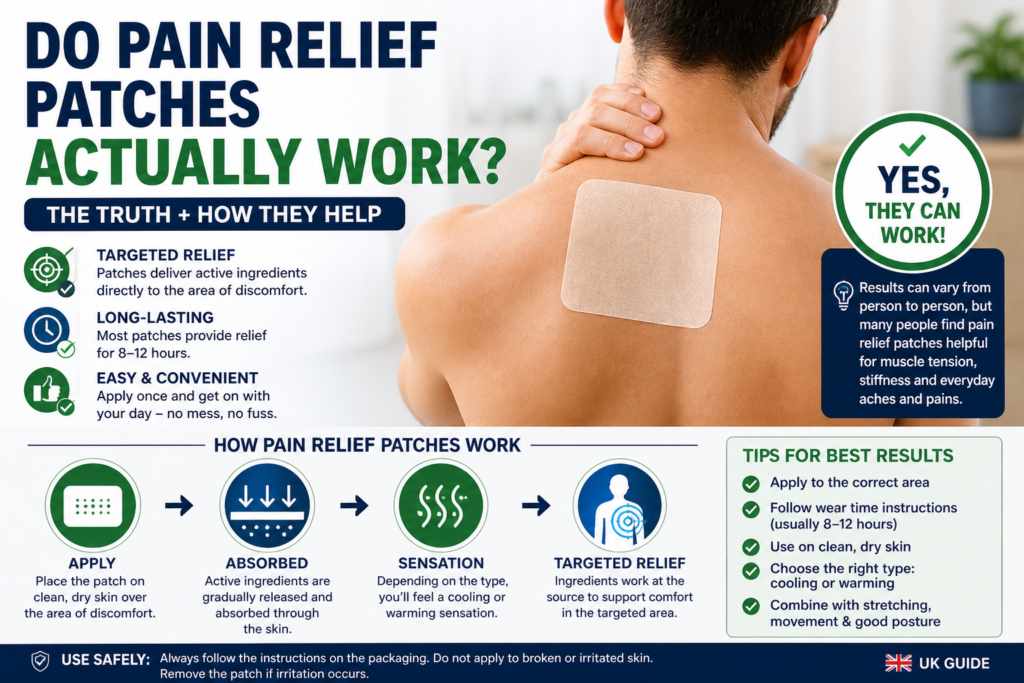
Pain relief patches are widely used for supporting muscle and joint comfort, but many people still ask the same question:
Do pain relief patches actually work?
With so many options available — including cooling, warming, and menthol-based patches — it’s important to understand what these products are designed to do and what you can realistically expect from them.
In this guide, we explore how pain relief patches work, why people use them, and the factors that can affect their effectiveness.
What Are Pain Relief Patches?
Pain relief patches are adhesive topical products applied directly to the skin over areas of discomfort.
They often contain ingredients such as:
- Menthol
- Camphor
- Methyl salicylate
- Herbal extracts
These ingredients are gradually released while the patch is worn.
How Do Pain Relief Patches Work?
Pain relief patches work by delivering active ingredients directly to the targeted area.
Depending on the type of patch, they may create:
- A cooling sensation
- A warming effect
- A soothing feeling on the skin
Many people find these sensations comforting for everyday muscle tension and stiffness.
Why People Use Pain Relief Patches
Pain relief patches are popular because they are:
- Easy to apply
- Portable and convenient
- Long-lasting compared to some creams or oils
- Hands-free once applied
They are commonly used for:
- Neck and shoulder tension
- Lower back discomfort
- Muscle soreness after activity
- General stiffness
Do They Work for Everyone?
Like many topical products, results can vary from person to person.
Some factors that may affect effectiveness include:
- The type of discomfort
- The ingredients in the patch
- Correct placement
- Personal sensitivity and preference
Some people prefer cooling patches, while others find warming patches more comfortable.
Cooling vs Warming Patches
Cooling Patches
Cooling patches often contain menthol and are popular for:
- Post-exercise soreness
- Tired muscles
- Daytime use
Warming Patches
Warming patches are often used for:
- Muscle tightness
- Stiffness
- Relaxation
The best option usually depends on the sensation you personally prefer.
How to Get the Best Results from Pain Relief Patches
To improve effectiveness:
1. Apply Correctly
Place the patch directly over the area of discomfort.
2. Use on Clean, Dry Skin
This helps the patch stick properly.
3. Follow Wear Times
Most patches are designed to be worn for several hours.
4. Choose the Right Type
Cooling and warming patches work differently, so choose the option that suits your needs.
Pain Relief Patches vs Other Topical Products
Compared to oils or gels:
- Patches → long-lasting and convenient
- Oils → flexible and massage-friendly
- Gels → fast and lightweight
Some people combine different approaches depending on the situation.
Are Pain Relief Patches Safe?
When used according to instructions, pain relief patches are generally straightforward to use.
However, it’s important to:
- Avoid broken skin
- Follow usage instructions
- Remove the patch if irritation occurs
Supporting Muscle Comfort Naturally
Pain relief patches are often used alongside healthy daily habits such as:
- Stretching
- Staying active
- Good posture
- Regular movement breaks
These habits help support overall comfort and flexibility.
Final Thoughts
Pain relief patches are popular because they provide targeted, convenient support for everyday muscle and joint discomfort.
While results vary between individuals, many people find them helpful as part of a broader wellbeing routine.
Understanding how patches work — and using them correctly — can help you decide whether they are the right option for you.
for more information please refer to our other blog posts:
- Best Pain Relief Patches in the UK
- Cooling vs Warming Pain Relief Patches
- Can You Use Pain Relief Patches Every Day
- How Long Should You Leave a Pain Relief Patch On
- Menthol Oil vs Pain Relief Patches
Disclaimer
This article is for general educational and wellbeing purposes only. It is not intended as medical advice and should not replace guidance from a qualified healthcare professional.